

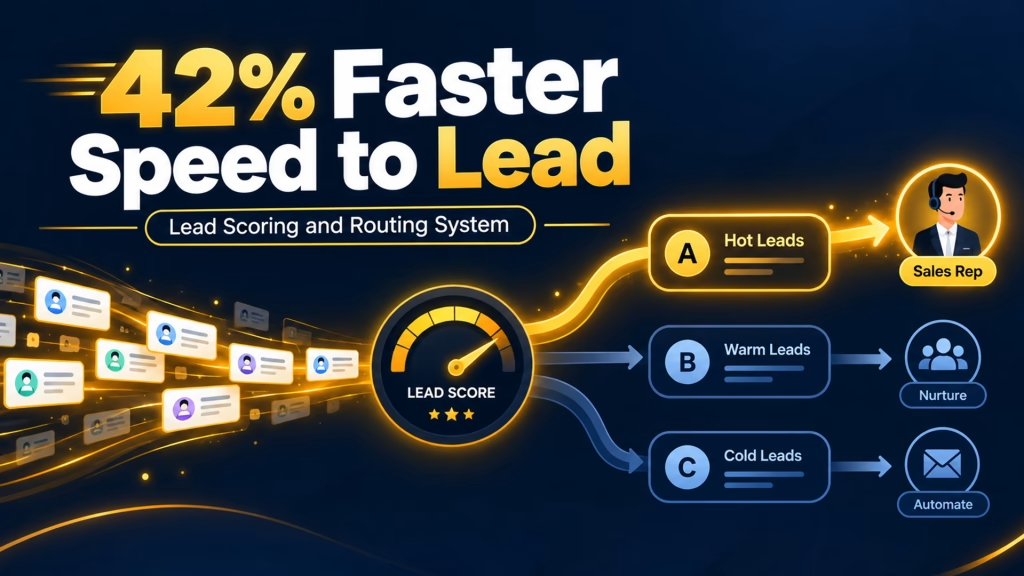
TL;DR: I built a lead scoring and routing system in HubSpot for a B2B SaaS company. A scoring model rates every inbound lead on fit and intent the moment it arrives, and workflows route it to the right rep automatically. Speed to lead dropped by 42%, hot leads stopped sitting in a shared queue, and reps now spend their time on the leads most likely to buy.
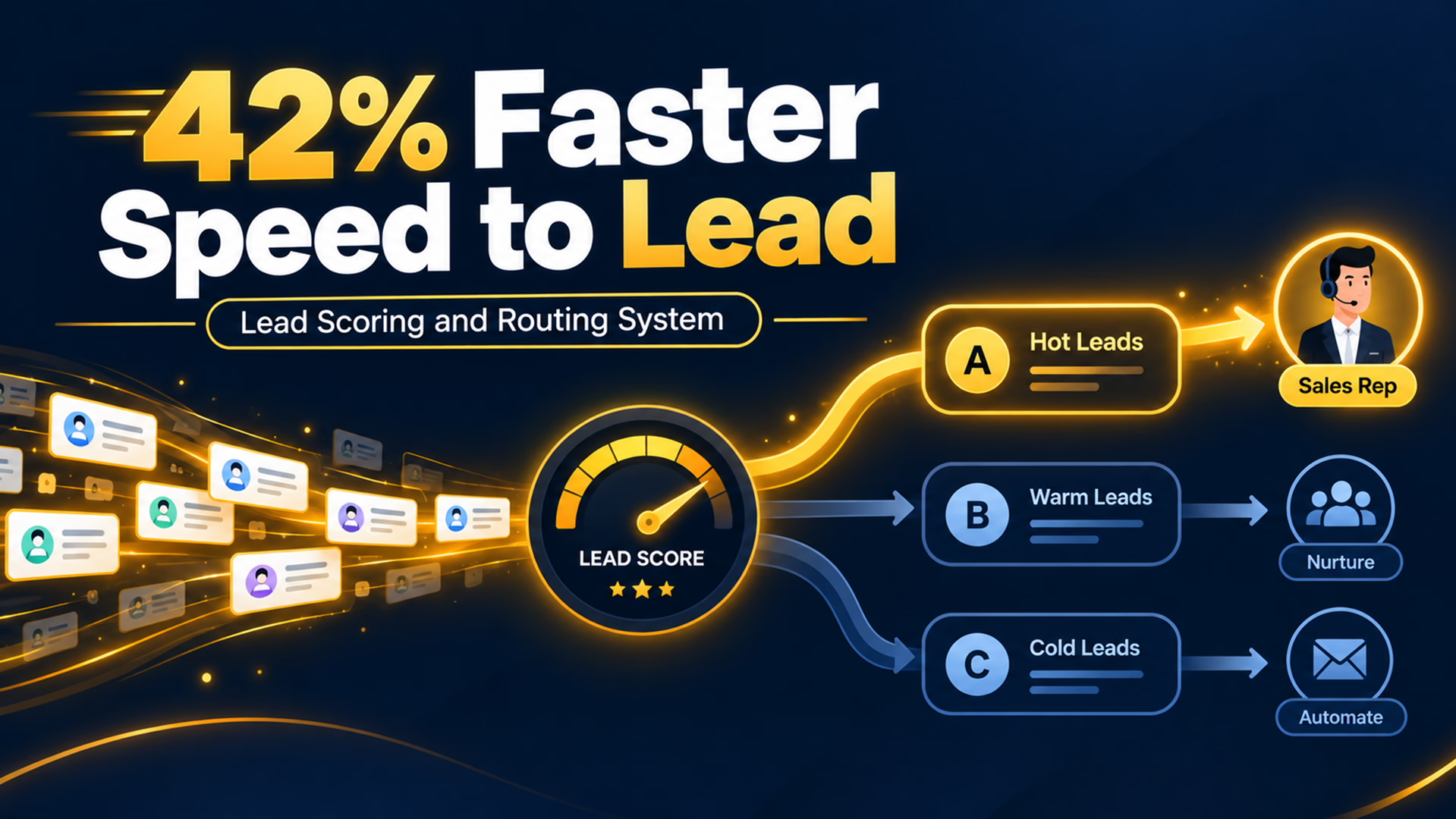
A lead scoring and routing system gives each new lead a score based on who they are and what they do, then sends high-value leads to the right person fast. In this case study, I explain how I designed and built one, what it changed, and how a similar setup could work for your sales team.
Project snapshot
| Industry | B2B SaaS |
| My role | Sole consultant: scoring design, workflow build, testing, handover |
| Timeline | 4 weeks |
| Stack | HubSpot CRM, HubSpot workflows, enrichment data |
| Deliverables | Scoring model, HubSpot routing workflows |
| Headline result | 42% reduction in speed to lead |
The problem: every inbound lead looked the same
The company generated steady inbound demand from demos, content downloads, and pricing page visits. The handling process was the weak point:
- No prioritization. A student downloading an ebook and a VP requesting a demo landed in the same queue.
- Manual assignment. A sales manager reviewed leads by hand and assigned them, which created delays, especially outside working hours.
- Slow first response. Average speed to lead was about 4 hours, and high-intent leads often cooled before anyone called.
- No shared definition of “qualified.” Marketing and sales disagreed on which leads deserved follow-up.
The cost was missed demos, wasted rep time, and friction between teams.
Goals and constraints
Goals:
- Score every inbound lead automatically on fit and intent
- Route leads to the right rep without manual review
- Cut speed to lead, especially for high-intent leads
Constraints:
- Everything had to live inside the existing HubSpot setup
- The model had to be simple enough for sales and marketing to understand and adjust
- No dedicated operations hire to maintain it
My approach: score on fit and intent, then route by rules
I split scoring into two parts so the logic stays transparent and easy to tune.
Fit score: is this the right kind of company and person?
Company size, industry, region, job title and seniority, and tech stack signals earn or lose points. A director at a 200-person SaaS company scores higher than a freelancer at a micro business.
Intent score: how ready are they to buy?
Demo requests, pricing page visits, repeat site sessions, product comparison content, and email engagement add points. Passive actions like a single blog visit add very few.
Routing rules
Combining both scores places each lead into a tier, and each tier follows a different path:
- Tier A (hot): instantly assigned to a rep by territory or round robin, with a task and an internal notification
- Tier B (warm): assigned to an SDR queue with a defined follow-up window
- Tier C (cold): enrolled in a nurture sequence, with no rep time spent until intent rises
Step-by-step build
- Audit past closed-won and closed-lost deals to learn which attributes and behaviors actually predicted a sale.
- Define the scoring model with sales and marketing, including point values and tier thresholds.
- Configure the HubSpot scoring properties for fit and intent, plus a combined score.
- Build the routing workflows for territory, round robin, and out-of-hours handling.
- Add alerts and SLAs so a hot lead triggers an instant notification and an escalation if untouched.
- Test on historical leads, then go live and review the first two weeks of data to refine thresholds.
Tech stack
- HubSpot CRM: single source of truth for leads, scores, and ownership
- HubSpot workflows: automatic scoring, tiering, assignment, and alerts
- Enrichment data: fills missing company and title fields so scoring is accurate
Results
| Metric | Before | After |
|---|---|---|
| Average speed to lead | 4 hours | 2 hours 20 minutes (42% faster) |
| Speed to lead for Tier A leads | 3 hours | Under 5 minutes |
| Manual lead review time per week | 5 hours | Under 30 minutes |
| Lead to meeting conversion | 11% | 16% |
| Marketing and sales agreement on qualified leads | Low | Single shared definition |
The biggest gain was for the leads that mattered most. Hot leads now reach a rep within minutes instead of hours.
Challenges and what I would improve
Challenge 1: Over-scoring activity. Early on, frequent email opens inflated scores for people with no buying intent. I reduced the weight of passive engagement and increased the weight of high-intent actions.
Challenge 2: Incomplete data. Many leads arrived with missing job titles or company size. I added enrichment and a safe default so missing data would not push good leads into the wrong tier.
Next improvement: retrain the point values every quarter using closed-won data, so the model keeps pace with changes in the buyer profile.
Key takeaways
- Speed to lead matters most for your best leads, so prioritization is worth more than raw speed on everything.
- A simple, transparent scoring model beats a complex one nobody trusts.
- Shared definitions of “qualified” reduce friction between sales and marketing.
Frequently asked questions
What is a lead scoring and routing system?
It is an automated process that rates each lead on fit and intent, then assigns it to the right person or sequence based on that score.
What is speed to lead?
Speed to lead is the time between a lead submitting a form or taking a buying action and the first meaningful contact from sales.
Do I need HubSpot Enterprise to do this?
Some scoring and routing features depend on your HubSpot plan, but a strong version is possible on many plans. I check this during the audit.
How long does it take to build a lead scoring and routing system?
For a focused B2B SaaS setup like this one, about four weeks from audit to launch.
Want a lead scoring and routing system for your team?
- Business owners: Book a 20-minute workflow audit and I will show where faster, smarter routing could recover lost leads.
- Recruiters and hiring teams: View my resume or contact me about remote RevOps and AI automation roles.
