

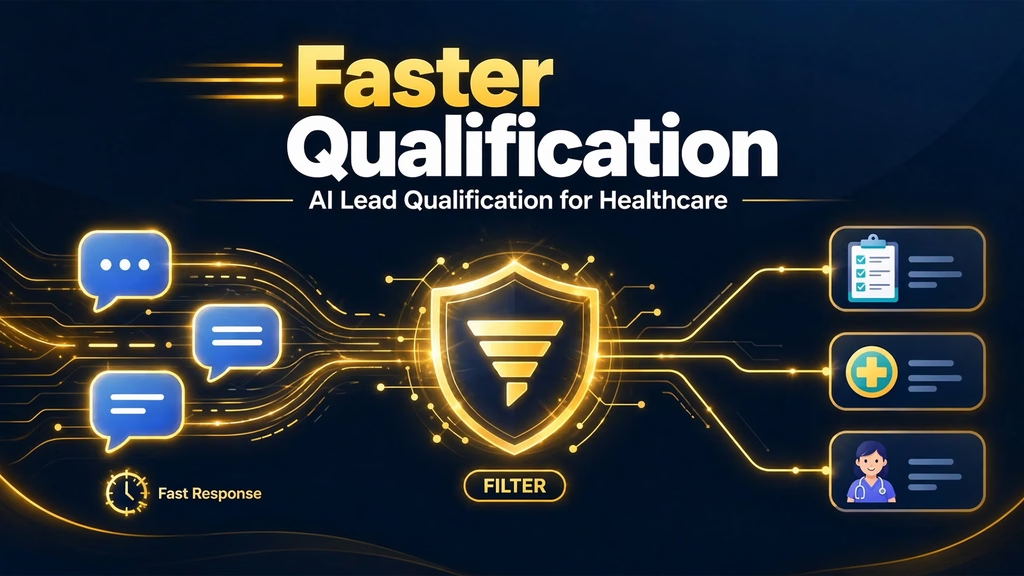
TL;DR: I designed an AI lead qualification system for a healthcare business that receives a steady flow of new inquiries. The workflow reads each inquiry, extracts the key details, scores how well it fits the service, and routes it to the right team member, with urgent cases escalated to a person immediately. Qualification time per inquiry dropped from about 12 minutes to under 2, first response time fell from hours to minutes, and staff regained roughly 15 hours a week.
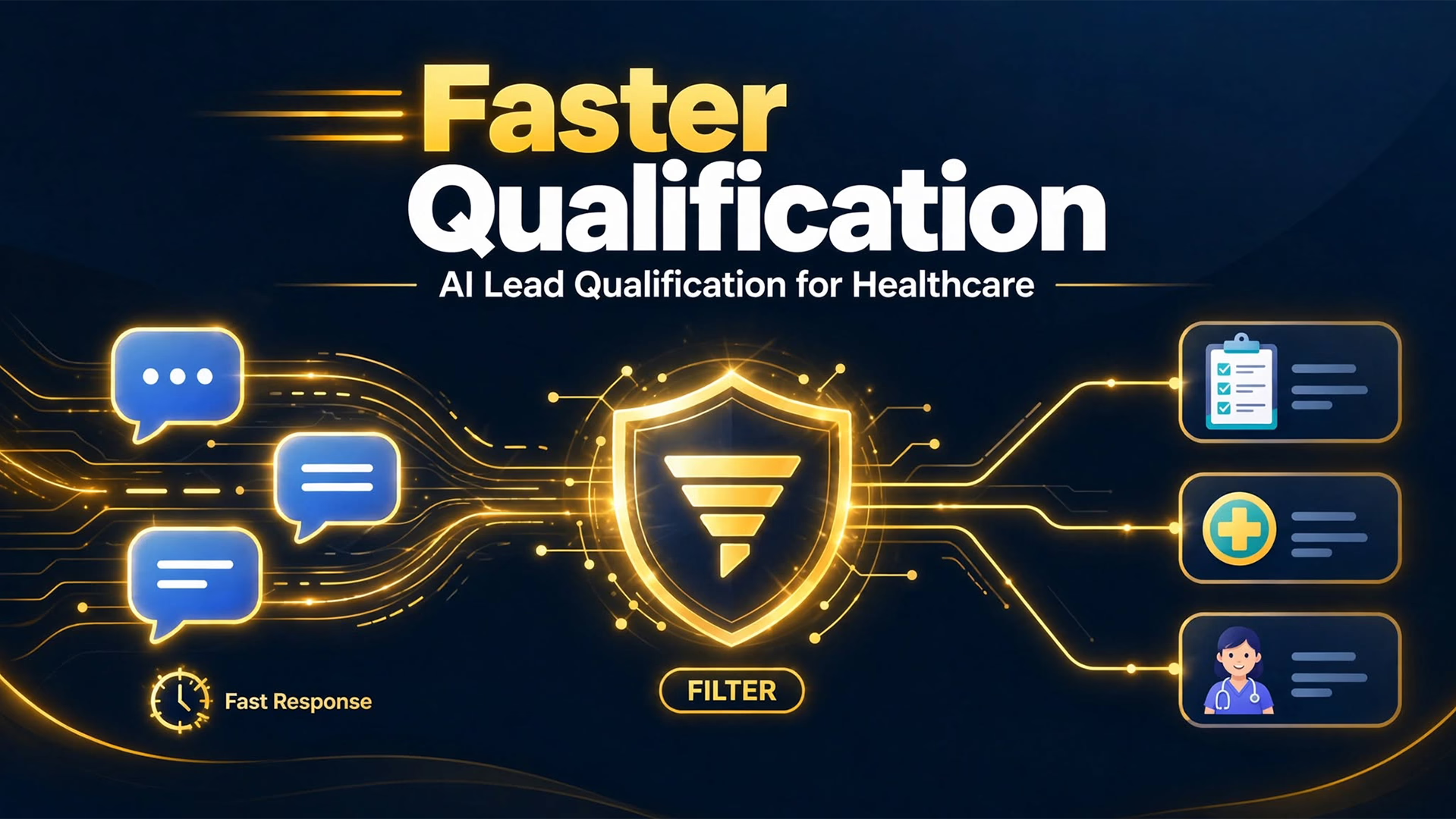
An AI lead qualification system for healthcare is an automated intake workflow that sorts and prioritizes incoming inquiries, so staff spend their time on conversations instead of data entry.
In this case study, I explain how I designed and built one, the safeguards I included, and how a similar approach could work for your practice or healthcare business.
Project snapshot
| Industry | Healthcare |
| Focus | Lead automation |
| My role | Sole consultant: workflow design, development, testing, handover |
| Timeline | 5 weeks |
| Stack | Claude Code, Python, FastAPI, Claude API, PostgreSQL, Pydantic, pytest |
| Deliverable | AI-assisted intake and qualification workflow |
| Headline result | Faster qualification, from about 12 minutes to under 2 per inquiry |
The problem: inquiries arrived faster than staff could sort them
The business received inquiries through web forms, email, and messaging channels. Handling them was almost entirely manual:
- Slow first response. Inquiries waited an average of about 5 hours, and people in the market for care often contacted a competitor first.
- Repetitive triage. Front desk staff read each message, searched for missing details, and decided who should respond, taking about 12 minutes per inquiry.
- Inconsistent decisions. Qualification depended on who was working that day, so similar inquiries were handled differently.
- No visibility. Managers could not see how many inquiries came in, which sources performed, or where leads were lost.
The cost was lost inquiries, tired staff, and a patient experience that started with a long wait.
Goals and constraints
Goals:
- Qualify and prioritize every inquiry automatically
- Cut first response time
- Give staff a clear, consistent summary for each lead
Constraints:
- The AI must not give medical advice or make clinical decisions
- Sensitive details had to be minimized, protected, and logged
- A human had to stay in control of every handoff
- The solution had to fit existing tools, with no large new platform to learn
My approach: structure first, AI second, humans always in control
I designed the AI lead qualification system as a pipeline where the AI handles reading and organizing, and people handle every decision that matters.
Step 1: Capture inquiries from every channel
A single intake service built in Python and FastAPI receives inquiries from forms and connected channels and converts them into one standard format.
Step 2: Extract and structure the details
The Claude API reads each message and returns a structured result: the service requested, preferred timing, location, contact method, and any missing information. Pydantic validates the output, so malformed or incomplete results are caught instead of passed along.
Step 3: Score and qualify
A transparent scoring layer rates each inquiry on service fit, completeness, urgency of timing, and source. Rules, not the AI alone, decide the final tier, so the logic is easy to explain and adjust.
Step 4: Route to the right person
High-fit inquiries go to a coordinator with a short summary and suggested next step. Incomplete inquiries receive an automatic follow-up asking for the missing details. Poor-fit inquiries get a polite, approved response and are logged.
Step 5: Escalate urgent cases to a human
If a message contains urgent or sensitive language, the system skips normal scoring and alerts a staff member immediately. It never tries to assess or advise on the situation.
Privacy and safety by design
- Data minimization: only the fields needed for qualification are stored and passed to the AI.
- No clinical output: the system never gives medical advice, diagnoses, or treatment suggestions.
- Human handoff: every qualified lead and every urgent flag ends with a person.
- Audit trail: each decision, score, and message is logged so staff can review what happened and why.
- Access control: staff see only what their role requires.
Step-by-step build
- Map the current intake process by shadowing the front desk and listing every channel, question, and decision.
- Define qualification criteria with the practice lead, including tiers, required fields, and escalation rules.
- Build the intake service in Python with a standard inquiry format and validation.
- Design and test the AI extraction prompts on past inquiries with identifying details removed.
- Add scoring, routing, and the urgent escalation path, with alerts to the right team member.
- Test with pytest and a pilot run, review misclassifications weekly, then roll out in stages.
How Claude Code helped
I used Claude Code during development to scaffold the service, write validation models and unit tests, and refactor as requirements changed. This shortened the build time and produced a better-tested system, while I kept control of architecture, safety rules, and every decision that affects patients and staff.
Tech stack
- Python and FastAPI: intake service, scoring logic, and routing
- Claude API: reads free-text inquiries and returns structured fields
- Pydantic: strict validation of every AI output
- PostgreSQL: inquiry records, scores, and audit logs
- pytest: automated tests for extraction, scoring, and escalation rules
- Email, Slack, or CRM integration: delivers summaries and alerts to staff
Results
| Metric | Before | After |
| Qualification time per inquiry | 12 minutes | Under 2 minutes |
| Average first response time | 5 hours | 10 minutes |
| Staff time on manual triage | 20 hours per week | 5 hours per week (15 hours saved) |
| Inquiries with complete information | 58% | 86% |
| Inquiries classified consistently | Varied by staff member | Single rule set |
| Urgent messages reaching a person | Dependent on who read first | Immediate alert every time |
The most important improvement was speed on the inquiries that mattered most, with a person always making the final call.
Challenges and what I would improve
Challenge 1: Over-confident AI output. Early on, the model sometimes filled missing details with plausible guesses. I changed the prompt to return “unknown” for missing fields and added validation that rejects guessed values.
Challenge 2: Urgent language detection. Wording varied widely, and some urgent messages looked routine. I combined keyword rules with an AI check and set the system to escalate whenever there is doubt.
Next improvement: add a weekly review dashboard showing misclassified inquiries, so staff feedback can steadily improve the criteria and prompts.
Key takeaways
- In healthcare, the best use of AI is organizing information and speeding up response, not replacing human judgment.
- Strict validation and clear rules make AI output safe enough to rely on.
- Escalation paths and audit logs build the trust that healthcare teams need before they adopt automation.
Frequently asked questions
What is an AI lead qualification system for healthcare?
It is an automated workflow that reads incoming inquiries, extracts key details, scores fit, and routes each lead to the right person, with urgent cases escalated to staff immediately.
Does the AI give medical advice?
No. The system only organizes and prioritizes inquiries. Clinical questions and urgent situations always go to a person.
How is patient information protected?
The design minimizes the data collected, validates and logs every step, and limits access by role. Specific compliance requirements depend on your region and setup, and I review them during the audit.
How long does it take to build an AI lead qualification system for healthcare?
For a focused setup like this one, about five weeks from process mapping to rollout.
Want an AI lead qualification system for your healthcare business?
- Business owners and practice managers: Book a 20-minute workflow audit and I will show where faster intake could recover lost inquiries.
- Recruiters and hiring teams: View my resume or contact me about remote AI automation roles.
